1. Industry Background and Market Demand
Modern medical diagnostic and therapeutic equipment relies heavily on stable, interference-free power supply environments, especially in operating rooms, intensive care units (ICUs), and emergency treatment areas. Conventional commercial mains power systems adopt grounded
power distribution modes, which carry inherent risks including leakage current conduction, electric shock hazards, and accidental power cutoff triggered by ground fault protection. These hidden dangers may lead to interruption of critical medical equipment operation, inaccurate diagnostic data, and even threats to patient and medical staff safety.
Global medical industry regulatory systems have established stringent power safety standards for medical-grade electrical equipment. Unlike industrial isolation transformers, medical isolation power equipment must achieve zero ground electric shock risk, uninterrupted power supply under minor ground faults, and strong anti-interference capability. Against the backdrop of continuous upgrading of intelligent medical equipment and standardized medical site construction worldwide, high-performance medical IT isolation transformers have become mandatory core supporting components for high-grade medical power distribution systems, generating stable and growing market demand in global hospital renovation and new medical infrastructure projects.
2. Core Concept and Key Technical Principles
A medical IT isolation transformer is a dedicated power conversion device built for medical isolated power supply systems, with core technical logic of electrical isolation and fault tolerance power supply. Different from ordinary transformers that only realize voltage transformation, this device completes complete electrical isolation between input mains power and output terminal power through physical isolation and electromagnetic induction principles.
The core technical advantage of the medical IT isolation transformer lies in its unique ground fault tolerance mechanism. In standard mains power systems, excessive ground leakage current will immediately activate leakage protection devices and cut off power supply. In contrast, the isolated power converted by the medical IT isolation transformer has no ground potential reference. When low ground resistance or minor leakage current occurs in the circuit, the system will not trigger power outage protection. This mechanism fundamentally ensures the continuity and safety of medical power supply, which is the core technical indicator that distinguishes medical-grade products from ordinary civil and industrial transformers.
In addition, the device adopts full copper inter-turn shielding technology as a key anti-interference measure. This structure can effectively isolate static accumulation and electromagnetic harmonic interference generated by mains power fluctuation and peripheral electrical equipment, avoiding signal distortion and operational failure of high-precision medical instruments such as electrocardiographs, ultrasound diagnostic equipment, and surgical monitoring devices.
3. Product Structure, Performance, Materials and Manufacturing Process
3.1 Core Structural Design
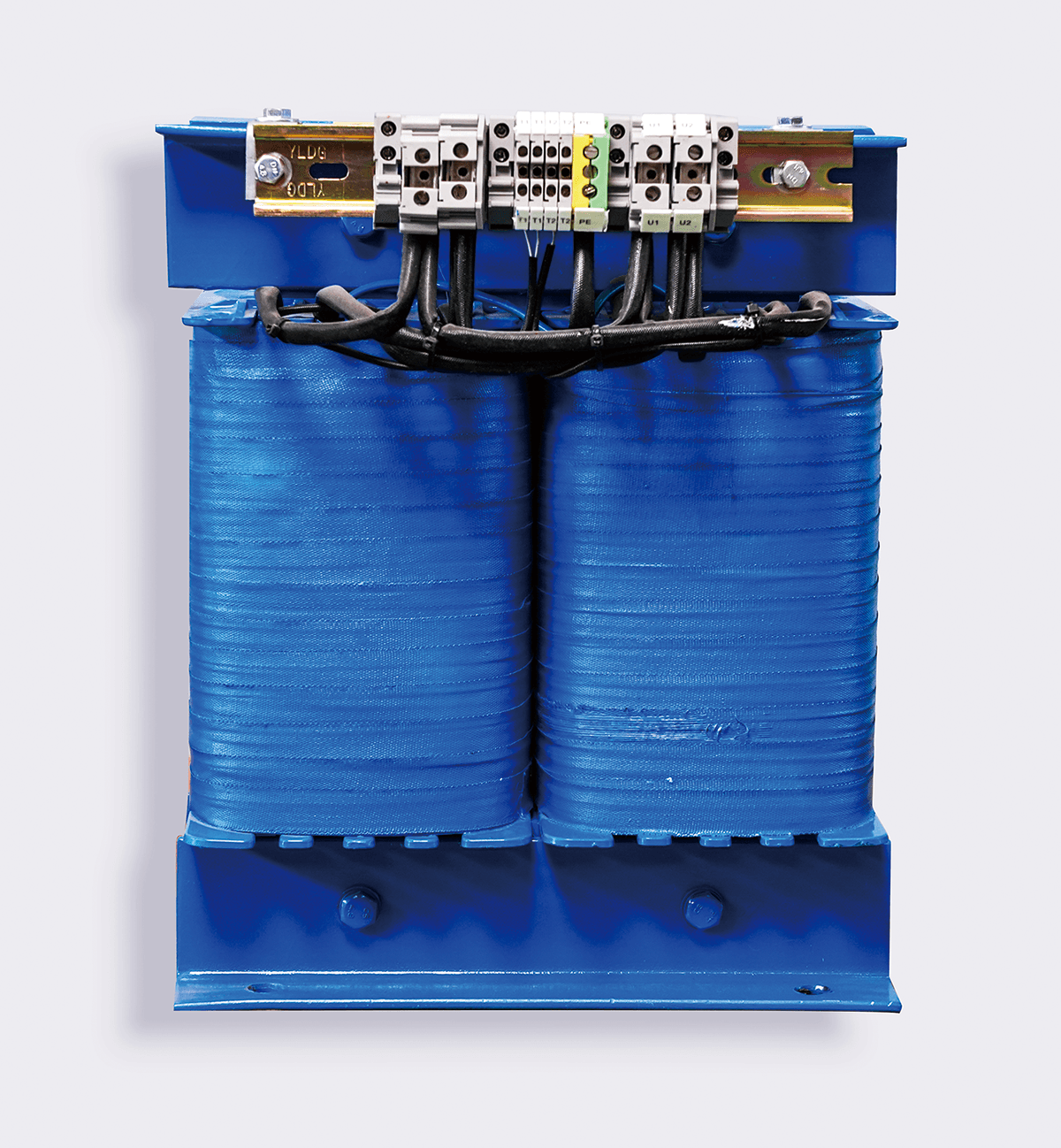
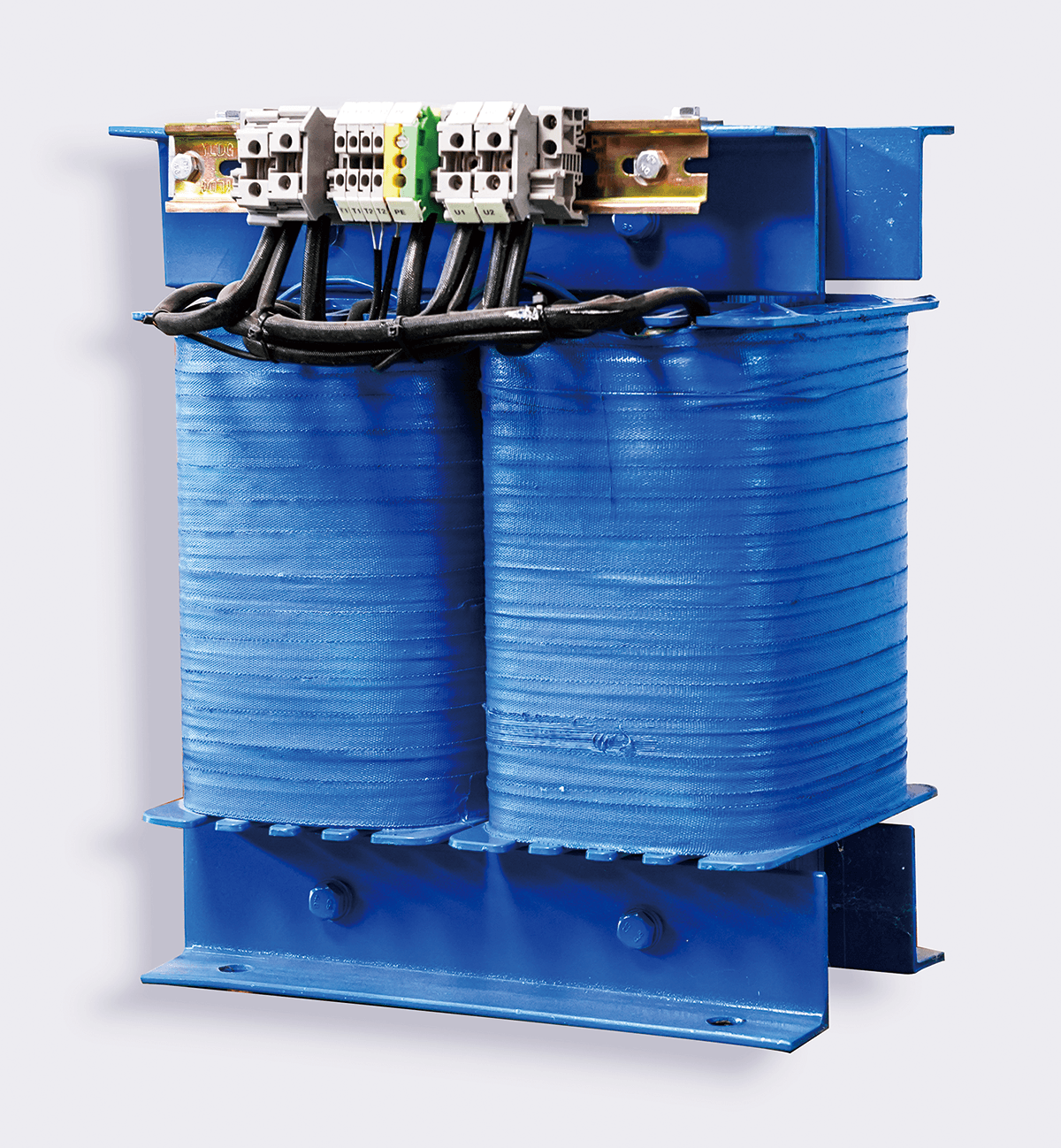
The YCIT-B series medical IT isolation transformer adopts a split physical isolation structure. The main body of the transformer is completely physically separated from all fixed accessories and mounting fixtures, eliminating stray current conduction and vibration interference caused by direct contact. An independent electrostatic shielding layer is added between the primary coil and secondary coil to form a double isolation barrier of electrical isolation and electrostatic shielding, further optimizing the anti-interference performance of the equipment.
3.2 Key Performance Parameters
The product covers three mainstream capacity specifications of 6.3kVA, 8kVA and 10kVA, adapting to the power demand of different-scale medical sites. It supports universal AC220V input and output voltage and 50/60Hz dual-frequency operation, meeting the power supply standards of most European and American medical institutions. In terms of operational stability, the no-load current is controlled below 3%, effectively reducing no-load power consumption; the full-load temperature rise after 3 hours of continuous operation is less than 90℃, realizing ultra-low temperature rise operation. The equipment operates with noise below 40dB, complying with the ultra-quiet environmental requirements of medical diagnosis and treatment areas. Its 4000V/1min withstand voltage test with no breakdown or flashover ensures excellent insulation reliability.
3.3 Core Material Selection
The entire coil of the transformer adopts pure copper material, which has better electrical conductivity, lower heat generation and stronger oxidation resistance compared with copper-clad aluminum and ordinary aluminum materials. The internal iron core is made of 300-grade grain-oriented silicon steel sheets from Baoshan Iron & Steel and Wuhan Iron & Steel. This high-precision steel material has high magnetic permeability and low magnetic loss, which effectively reduces core loss and operational temperature rise. All winding parts adopt high-temperature resistant matching materials, and the overall insulation grade reaches Class H, supporting long-term overload operation without structural damage.
3.4 Standard Manufacturing Process
The whole production process follows medical-grade precision manufacturing standards. The coil winding adopts uniform dense winding technology to ensure consistent inter-turn gap and stable electromagnetic performance. The electrostatic shielding layer is fully covered without dead angles to avoid local electromagnetic leakage. Each finished product undergoes strict withstand voltage, insulation, temperature rise and noise tests before leaving the factory, and is equipped with a standard 70℃ temperature control switch to realize automatic over-temperature protection, ensuring long-term stable rated power operation.
4. Key Factors Affecting Product Quality and Performance
The operational reliability of medical IT isolation transformers is determined by multiple core factors, among which material quality is the primary premise. The grade of silicon steel sheets directly affects the core loss and temperature rise performance; impure raw materials or low-grade steel will lead to increased energy consumption and accelerated equipment aging. The purity of copper coils determines the stability of current transmission and anti-overload capability, and inferior copper materials are prone to heat aging and insulation failure under long-term operation.
Structural process accuracy is another critical factor. The uniformity of coil winding, the integrity of inter-turn shielding and the reliability of physical isolation structures directly determine the equipment’s anti-interference ability and insulation performance. Incomplete shielding or insufficient physical isolation will cause electromagnetic harmonic interference, affecting the operation precision of medical equipment.
In addition, temperature control configuration and testing standards also affect long-term operational quality. Unqualified temperature control switch parameters will fail to respond to over-temperature risks in time, leading to equipment damage. Incomplete factory testing processes may leave hidden dangers such as insufficient withstand voltage performance and excessive noise, failing to meet medical site safety standards.
5. Supplier Selection Standards for Core Components
To ensure the consistent quality of medical-grade products, the selection of core raw material suppliers implements strict industry screening standards. For core silicon steel sheet materials, suppliers must have professional production qualifications for electrical steel, and their products must reach 300-grade high-precision standards, with stable magnetic loss and temperature resistance parameters verified by long-term industry applications. The series only adopts designated products from mainstream domestic steel manufacturers with mature supply systems and complete quality certification.
For pure copper coil raw materials, suppliers are required to provide material purity test reports and electrical performance certification, ensuring no impurity doping and stable conductivity. For supporting accessories such as temperature control switches, suppliers must have medical electrical supporting experience, and their products need to meet international electrical safety standards to ensure accurate and sensitive over-temperature protection response. All suppliers need to pass long-term quality audit and batch sampling testing to eliminate batch quality differences.
6. Industry Pain Points and Common Technical Problems
In the application of
medical power supply systems, traditional power distribution schemes and inferior isolation equipment have long exposed multiple industry pain points. First, ordinary isolation equipment has poor anti-interference performance, which cannot filter mains harmonics and static interference, resulting in unstable operation of high-precision medical equipment and even affecting diagnostic accuracy. Second, most civil and industrial transformers will trigger power outage protection under minor ground faults, failing to guarantee the continuous power supply of critical medical equipment, bringing great safety risks to clinical treatment.
Third, low-end products generally have problems such as high temperature rise, large noise and poor overload resistance. Long-term full-load operation is prone to aging damage, short service life and frequent maintenance, increasing the operational cost of medical institutions. Fourth, the structural design of some products is not standardized, lacking complete physical isolation and electrostatic shielding measures, which cannot meet the strict safety and environmental protection requirements of medical sites.
7. Application Scenarios and Industry Cases
The YCIT-B series medical IT isolation transformers are widely applicable to all medical scenarios requiring high-safety isolated power supply, covering tertiary hospitals, specialized medical centers, outpatient surgical rooms, ICUs and pediatric diagnosis and treatment areas. In European and American standard medical institutions, the product is mainly used for supporting power supply of high-precision medical equipment including surgical instruments, vital sign monitors, medical imaging equipment and emergency rescue equipment.
In practical engineering cases, the equipment has been applied in the power renovation project of multiple community hospitals in Europe. By replacing traditional grounded power supply transformers, it completely solves the problem of accidental power outage of monitoring equipment caused by ground leakage current. In the ICU ward renovation project of American private medical centers, the ultra-low noise and low temperature rise characteristics of the product adapt to the long-term uninterrupted operation environment of the ward, and the efficient anti-interference performance ensures the stable operation of real-time monitoring equipment, effectively improving the safety level of medical power supply.
8. Industry Trends and Future Development Directions
With the continuous development of intelligent and precise medical treatment, the medical power supply industry is evolving towards higher safety, higher intelligence and lower energy consumption. At present, global medical safety standards are continuously upgraded, and the threshold for medical isolation power equipment performance is gradually improved, eliminating low-end industrial alternative products in the market.
In the future, medical IT isolation transformer products will further optimize energy-saving performance, reduce no-load and full-load power consumption on the basis of maintaining stable performance. Intelligent monitoring functions will become the mainstream development direction, realizing real-time monitoring of equipment temperature, leakage current, operational load and other data, and remote fault early warning. In addition, with the popularization of modular medical power supply systems, products will develop towards miniaturization, integrated installation and stronger compatibility, adapting to the rapid construction and intelligent upgrading of modern medical infrastructure. At the same time, higher requirements will be put forward for environmental protection and low-noise manufacturing, to meet the ultra-high environmental standards of top medical institutions.
9. FAQ
Q1: What is the essential difference between a medical IT isolation transformer and an ordinary isolation transformer?
The core difference lies in safety and fault tolerance performance. Ordinary transformers only complete voltage transformation and simple isolation, and will trigger power outage protection under ground leakage faults. Medical IT isolation transformers support continuous power supply under minor ground faults, and are equipped with full electrostatic shielding and physical isolation structures, with ultra-low noise, low temperature rise and medical-grade insulation performance, which fully meets the special safety needs of medical scenarios that ordinary products cannot cover.
Q2: Why is pure copper material mandatory for medical-grade transformers instead of aluminum materials?
Pure copper coils have lower resistivity, better heat dissipation and stronger anti-oxidation and anti-overload capabilities. Aluminum coils are prone to excessive heat generation and performance attenuation under long-term full-load operation, with poor stability. Medical equipment requires 24-hour uninterrupted stable power supply, and pure copper materials can effectively extend equipment service life and avoid operational faults caused by material aging, which is a necessary condition for medical-grade power supply safety.
Yes. The product supports 50/60Hz dual-frequency operation and standard AC220V input and output voltage, matching the mainstream power supply specifications of European and American medical institutions. It complies with international medical electrical safety standards in terms of insulation performance, noise control and anti-interference capability, and has been fully verified in overseas medical engineering projects.
Q4: What maintenance measures are required for long-term operation of the equipment?
The series of products adopt high-temperature resistant materials and high-quality silicon steel sheets, with stable performance and low failure rate. Daily maintenance only requires regular cleaning of dust on the equipment surface and checking the normal operation of the temperature control switch. No frequent component replacement is needed, and it can maintain stable performance for a long time under rated working conditions.


 English
 Pусский
 العربية
 қазақ
қазақ



 Whatsapp
 电话
电话