1. Industry Background & Market Demand
Global low-voltage
power distribution systems are undergoing continuous upgrading driven by industrial automation, commercial building intelligence, and residential electrification renovation. With the widespread adoption of 50Hz/60Hz dual-frequency
power grids and high-load electrical equipment in Europe, North America and other regions, the stability and safety of terminal power distribution circuits have become core indicators of electrical system engineering quality.
Traditional low-voltage protection components have prominent limitations in environmental adaptability, repeated service life and load matching performance, which cannot meet the long-term operation requirements of high-density power distribution scenarios. The standardized construction of industrial production lines, high-rise commercial buildings and civil residential communities has generated sustained rigid demand for reliable low-voltage protection devices. As a core terminal protection component, the AC plastic shell circuit breaker has become a standard configuration for low-voltage power distribution systems due to its comprehensive protection capability and reusable characteristics, and the market puts forward higher requirements for its temperature resistance, breaking capacity and operational stability.
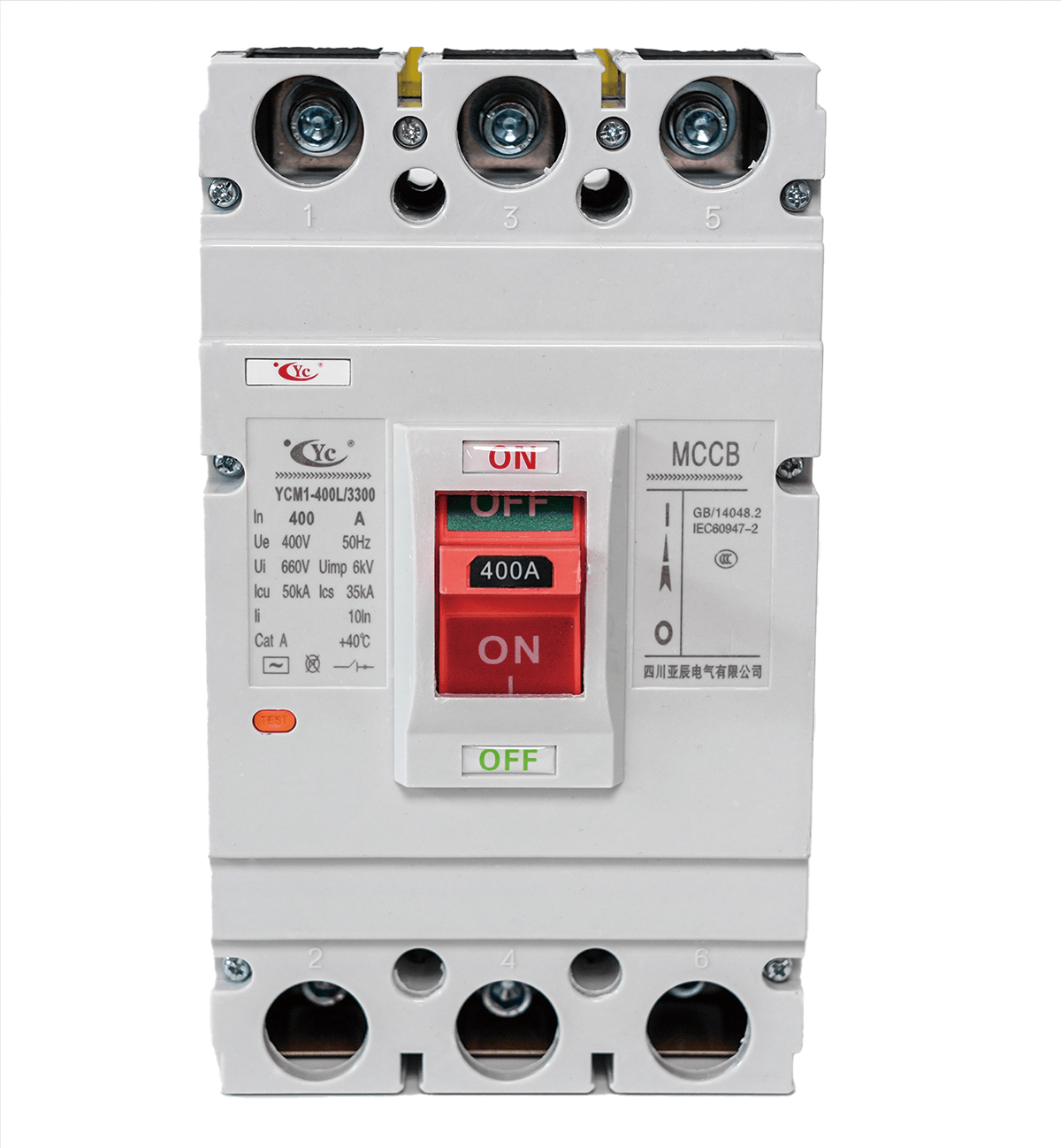
2. Core Concept & Key Technical Principles
An AC plastic shell circuit breaker is a reusable low-voltage switching and protection device applicable to AC 50Hz/60Hz power grids with a rated operating voltage Ue ≤ 690V. Its core technical logic is to realize real-time monitoring and automatic protection of distribution circuits through mechanical and electrical linkage mechanisms, covering two core fault conditions: overload and short circuit.
For overload faults, the device relies on the thermal deformation characteristics of bimetallic strips inside the body. When the circuit load current exceeds the rated value for a continuous period, the accumulated heat triggers mechanical displacement, drives the tripping mechanism to disconnect the circuit, and avoids line aging and insulation damage caused by long-term overload operation. For short-circuit faults with instantaneous current surge, the electromagnetic induction component generates instantaneous magnetic force to trigger rapid tripping, completing circuit breaking within milliseconds to prevent equipment burnout and electrical fire hazards.
Different from disposable fuse protection devices, the biggest technical feature of the AC plastic shell circuit breaker is its restorable switching function. After fault tripping and circuit fault elimination, the manual closing mechanism can be reset repeatedly, which adapts to the non-frequent switching operation requirements of conventional power distribution loops and reduces the maintenance cost of power distribution systems.
3. Product Structure, Performance, Materials & Manufacturing Process
3.1 Core Product Structure
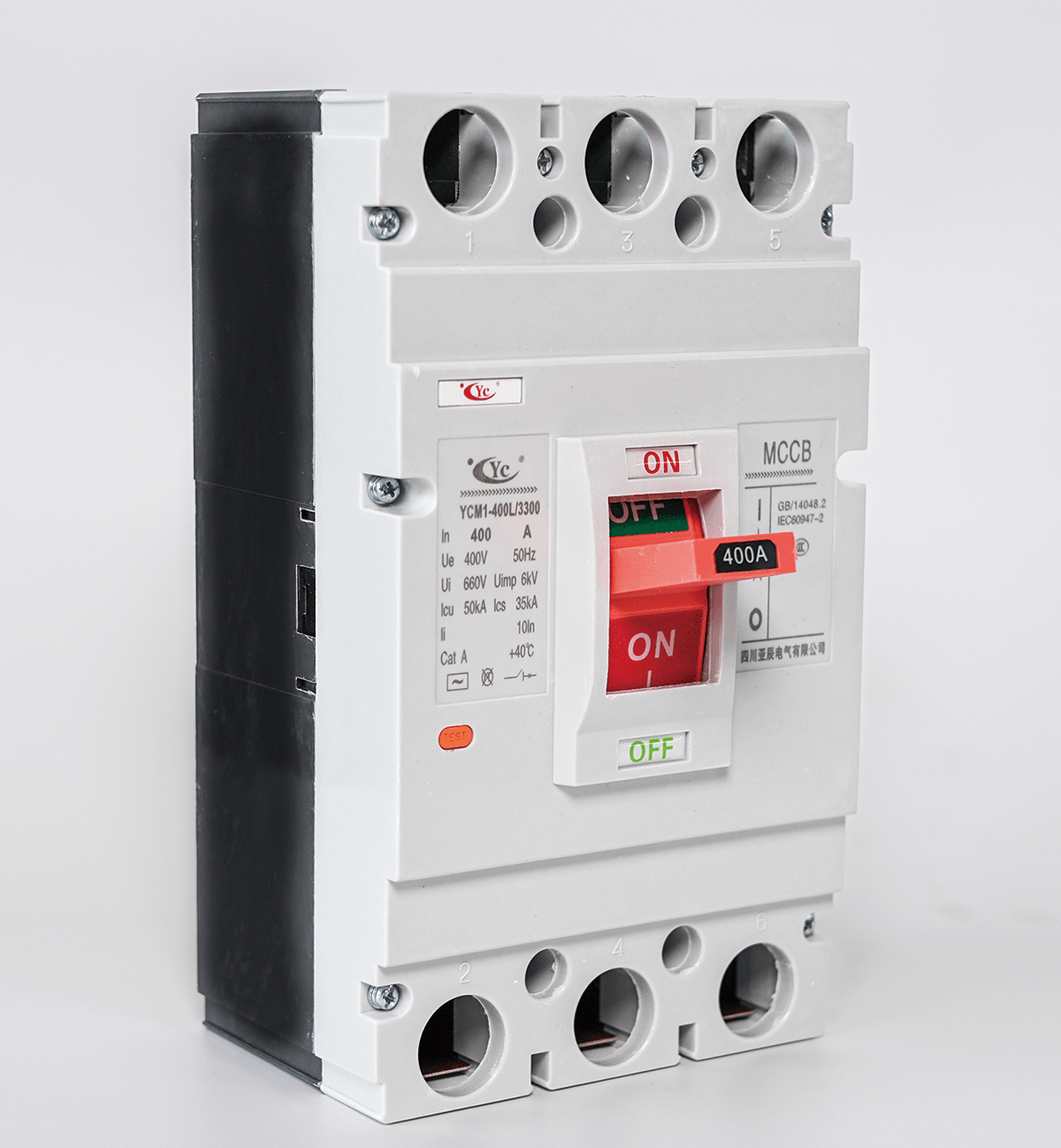
The overall structure of the AC plastic shell circuit breaker is divided into three core modules: plastic shell insulation module, internal execution mechanism module and electrical contact conduction module. The shell forms a closed insulation protection structure for internal components; the execution mechanism includes tripping, reset and manual operating parts, which undertake fault response and switching functions; the contact conduction module is responsible for normal current transmission and instantaneous breaking action, and the three modules are highly integrated to ensure compact structure and stable operation.
3.2 Key Performance Indicators
The product’s core performance is centered on low-voltage distribution safety and stability. The rated voltage covers all conventional AC low-voltage scenarios below 690V, adapting to dual-frequency power grids of 50Hz and 60Hz. It realizes full-coverage protection of line overload and short-circuit faults, with accurate tripping threshold and fast response speed. The mechanical service life and electrical service life meet international low-voltage electrical standards, supporting repeated closing and opening after tripping. In addition, it has excellent environmental adaptability, maintaining stable working performance in conventional temperature and humidity fluctuation scenarios of industrial and civil buildings.
3.3 Core Material Selection
The outer shell adopts high-strength flame-retardant thermosetting plastic, which has excellent insulation, high temperature resistance and anti-aging properties, and can effectively isolate internal electrical arcs and external environmental interference. The internal conductive contacts are made of copper alloy with silver plating treatment, which reduces contact resistance, avoids local overheating during high-current operation, and improves wear resistance during frequent switching. The bimetallic strip for overload protection is made of high-precision composite metal materials, ensuring consistent thermal deformation parameters and accurate tripping action. The mechanical transmission parts adopt high-hardness engineering steel to ensure long-term mechanical stability.
3.4 Main Manufacturing Processes
The production process follows standardized industrial electrical manufacturing specifications. The shell is formed by integral injection molding and secondary deburring and insulation detection to eliminate structural gaps and insulation defects. Internal metal components are processed by precision stamping and CNC finishing to ensure component matching accuracy. The core tripping mechanism is assembled in a dust-free constant-temperature workshop to avoid assembly errors caused by environmental changes. After assembly, all products undergo full-load current detection, short-circuit breaking test and repeated switching life test to screen out unqualified products and ensure consistent batch performance.
4. Key Factors Affecting Product Quality & Performance
Material performance consistency is the primary factor determining the quality of the AC plastic shell circuit breaker. Unqualified flame-retardant shell materials will lead to reduced high-temperature resistance and flame retardancy, easily causing shell deformation and arc breakdown in fault conditions. The material uniformity of bimetallic strips directly affects the accuracy of overload tripping; inconsistent thermal expansion coefficients will lead to tripping delay or misoperation.
Assembly precision of internal mechanisms is another core influencing factor. The matching gap of the tripping transmission structure determines the sensitivity of fault response. Excessive assembly tolerance will cause slow tripping or failure to trip, bringing hidden dangers to circuit safety. In addition, the surface treatment process of conductive contacts affects the long-term conductivity of the product. Unqualified silver plating process will lead to contact oxidation and increased resistance, resulting in local overheating of the circuit during long-term operation.
Environmental adaptability of production and testing links also cannot be ignored. Products without high and low temperature aging tests are prone to performance attenuation in extreme environmental scenarios, reducing the stability of power distribution system operation.
5. Supply Chain & Supplier Selection Criteria
The core supply chain of AC plastic shell
circuit breakers covers insulating plastic raw materials, precision metal components, electromagnetic accessories and finished product assembly and testing links. Supplier selection focuses on stability of batch quality, compliance of technical indicators and completeness of certification qualifications, which is the key to ensuring product consistency and market adaptability.
For raw material suppliers of insulating shells and metal contacts, priority is given to manufacturers with ISO9001 quality system certification and IEC electrical material standard certification. It is required that the raw material performance parameters have batch stability, and the flame retardant grade, insulation resistance and metal conductivity indicators meet EU and North American low-voltage electrical standards. For precision component processing suppliers, the core assessment indicators are processing precision tolerance and product qualification rate, to ensure that the matching accuracy of mechanical and electrical components meets the design requirements.
For finished product assembly suppliers, production process standardization and complete testing capability are essential. Qualified suppliers must be equipped with professional short-circuit test benches, life detection equipment and environmental aging test devices, and provide complete batch test reports to ensure that each batch of products meets the performance standards of low-voltage power distribution scenarios.
6. Common Industry Pain Points & Technical Problems
In the actual application of low-voltage power distribution systems, the industry currently faces several prominent pain points of AC plastic shell circuit breakers. First, individual low-end products have inaccurate tripping thresholds, which are prone to mis-tripping under normal load fluctuation or failure to trip under slight overload, affecting the normal power supply and safety protection of the circuit.
Second, some products have poor environmental adaptability. In high-temperature, high-humidity or dusty industrial scenarios, the internal mechanism is prone to damp aging and dust accumulation, resulting in reduced switching sensitivity and shortened service life. Third, the repeated use stability of partial products is insufficient. After multiple fault tripping and closing operations, the mechanical mechanism is worn and the contact conductivity declines, leading to increased failure rate of subsequent operation.
In addition, the compatibility of individual products with regional power grids is insufficient. Products without dual-frequency adaptive design cannot stably adapt to 50Hz/60Hz switching power grid environments, resulting in limited application scope in cross-regional engineering projects.
7. Application Scenarios & Industry Cases
The AC plastic shell circuit breaker is widely applicable to low-voltage power distribution and line protection scenarios with Ue ≤ 690V, covering industrial production, commercial construction, office buildings and civil residential fields, and is the core protection device for terminal power distribution circuits.
In industrial scenarios, it is applied to power distribution loop protection of factory production lines, mechanical and electrical equipment, and workshop lighting systems. It can quickly cut off faulty circuits when equipment short-circuit and line overload occur, protecting industrial production equipment from damage and avoiding production shutdown losses caused by electrical faults. In commercial and high-rise office building scenarios, the product is used for layered and zoned power distribution protection of building power systems, covering office equipment power supply, public area lighting, elevator auxiliary power distribution and other loops, ensuring the stable operation of
building electrical systems.
In civil residential scenarios, the device undertakes the protection of household main power distribution and public lighting circuits in residential communities, effectively avoiding electrical fires and equipment damage caused by household electrical overload and short-circuit faults. In addition, it is also used for terminal power distribution protection of shopping malls, logistics parks and other public infrastructure, adapting to the non-frequent switching and long-term stable operation requirements of various low-voltage distribution loops.
8. Current Trends & Future Development Direction
Driven by the intelligent upgrading of global low-voltage power distribution systems, the development of AC plastic shell circuit breakers presents three core trends. First, high precision and high stability iteration. With the improvement of power distribution system load density, products are developing towards more accurate tripping control, lower contact resistance and stronger environmental adaptability, to meet the protection requirements of high-precision and high-load power distribution scenarios.
Second, intelligent and modular upgrading. Traditional mechanical single-protection products are gradually transitioning to intelligent integrated products. The new generation of AC plastic shell circuit breakers will be equipped with real-time current and voltage monitoring, fault data recording and remote switching control functions, realizing intelligent management of power distribution loops and matching the development trend of smart power grids and smart buildings.
Third, energy conservation and environmental protection and standardization generalization. In response to the energy-saving and environmental protection requirements of the European and American electrical industries, products are optimized in terms of material energy consumption and operating loss, adopting low-power-consumption structural design and environmentally friendly flame-retardant materials. At the same time, product design is further standardized to adapt to global dual-frequency power grids and multi-scenario application requirements, realizing cross-regional universal application.
9. FAQ
Q1: Can AC plastic shell circuit breakers be used for long-term frequent switching operations?A1: No. This product is designed for non-frequent switching of power distribution loops. Frequent continuous opening and closing will cause accelerated wear of internal contacts and mechanical mechanisms, reduce electrical and mechanical service life, and easily lead to contact ablation and mechanism failure.
Q2: What is the difference between a plastic shell circuit breaker and a miniature circuit breaker?A2: Plastic shell circuit breakers have higher rated current and voltage bearing capacity, stronger short-circuit breaking capacity, and are more suitable for main and branch loop protection of industrial and large-scale commercial low-voltage distribution systems. Miniature circuit breakers are mostly used for terminal small-load loop protection, with lower bearing capacity and simpler protection structure.
Q3: Is manual inspection required after the circuit breaker trips?A3: Yes. After fault tripping, the internal circuit has abnormal overload or short-circuit conditions. It is necessary to check and eliminate circuit faults, confirm no hidden dangers, and then perform manual closing reset to avoid secondary faults and equipment damage.
Q4: What environmental conditions are not suitable for the operation of this product?A4: It is not suitable for long-term operation in corrosive gas environments, high-dust explosion-prone environments, and extreme high and low temperature environments beyond the standard working range, which will cause irreversible damage to the shell insulation and internal mechanical and electrical structures.


 English
 Pусский
 العربية
 қазақ
қазақ



 Whatsapp
 电话
电话